DUI Checkpoints During the Holidays in Carlsbad: Your Rights and Defense Options
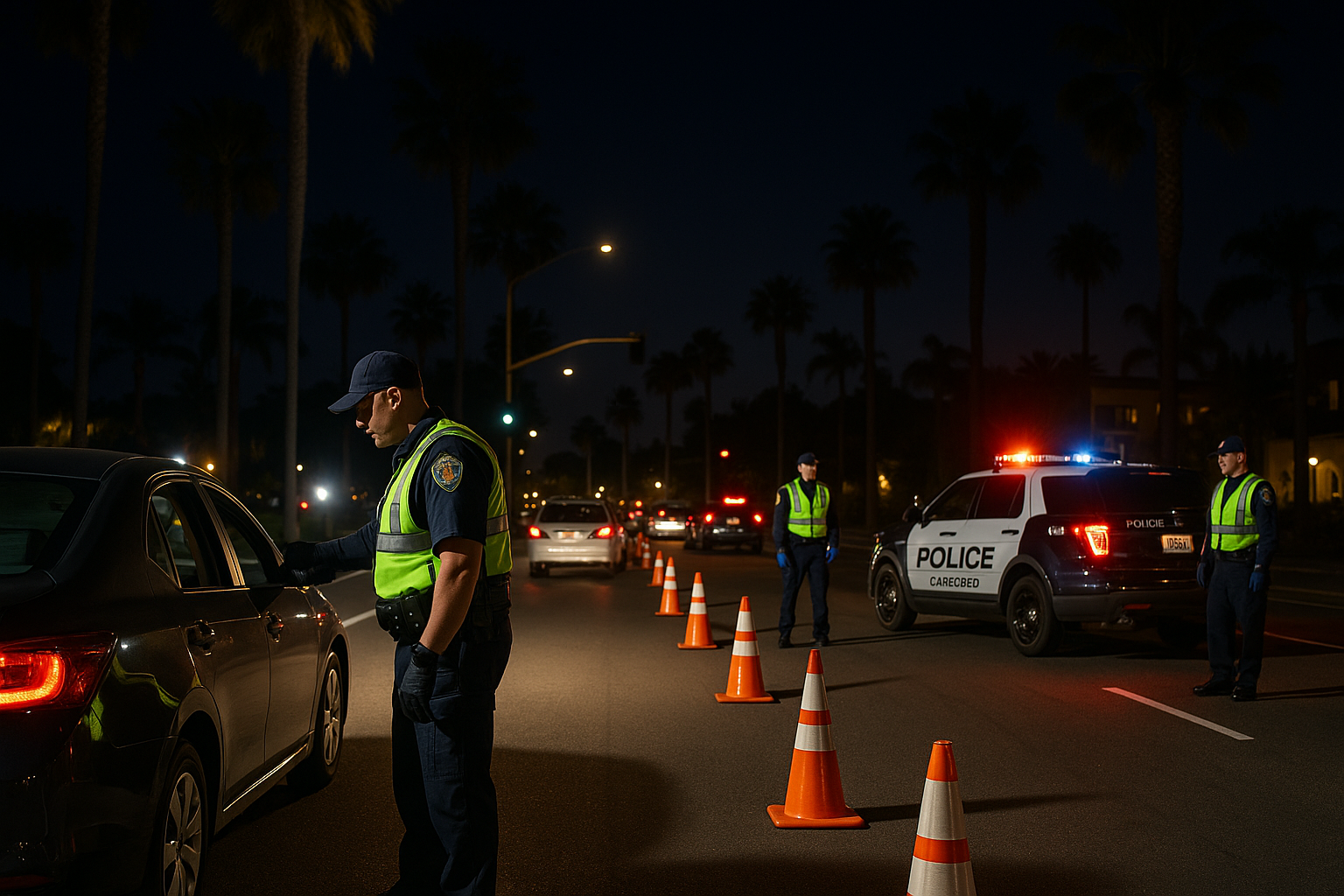
The holiday season brings festive celebrations, family gatherings, and unfortunately, increased DUI enforcement throughout Carlsbad and North County San Diego. From Thanksgiving through New Year's, law enforcement agencies dramatically increase their presence on the roads, conducting DUI checkpoints in high-traffic areas and aggressively pursuing impaired driving arrests.
If you've been arrested at a DUI checkpoint in Carlsbad, or if you're concerned about holiday DUI enforcement, understanding your legal rights and the defense options available is crucial. A DUI conviction carries severe consequences including jail time, substantial fines, license suspension, and a permanent criminal record that can impact employment, insurance rates, and your future.
At Coastal Legal Center APC, we've been defending clients against DUI charges throughout San Diego County for over 40 years. We understand the complexities of DUI checkpoint cases and know how to challenge evidence, protect your rights, and fight for the best possible outcome.
Why Holiday DUI Enforcement Increases
Law enforcement agencies across California conduct heightened DUI enforcement during holiday periods, particularly:
Thanksgiving weekend
Christmas through New Year's
Halloween
Super Bowl weekend
Memorial Day, Fourth of July, and Labor Day
During these periods, the California Office of Traffic Safety funds additional DUI patrols and checkpoints. Carlsbad Police Department, along with other North County agencies, set up sobriety checkpoints in strategic locations designed to catch impaired drivers leaving holiday parties, restaurants, and bars.
Common checkpoint locations in Carlsbad include:
Carlsbad Boulevard near the Village area
Palomar Airport Road
El Camino Real
Cannon Road
Checkpoint locations are typically chosen based on DUI arrest history and are positioned to maximize the number of vehicles screened.
Are DUI Checkpoints Legal in California?
Yes, DUI checkpoints are legal in California, but they must comply with strict constitutional requirements established by the U.S. Supreme Court and California courts. Under California Vehicle Code Section 2814.2, sobriety checkpoints are permitted if they follow specific guidelines to protect citizens' Fourth Amendment rights against unreasonable searches and seizures.
Legal Requirements for Valid Checkpoints:
For a DUI checkpoint to be constitutional, law enforcement must:
Have supervising officers make all operational decisions
Use a neutral mathematical formula for stopping vehicles (every car, every third car, etc.)
Maintain reasonable safety conditions with proper lighting and warning signs
Limit the time and intensity of each stop
Publicly advertise the checkpoint location in advance
Clearly identify the checkpoint as an official police operation
If law enforcement fails to follow these requirements, your DUI defense attorney may be able to challenge the checkpoint's legality and have evidence suppressed or charges dismissed.
Your Rights at a DUI Checkpoint
Understanding your constitutional rights during a checkpoint stop is crucial:
You Must Stop
You cannot avoid a checkpoint once you're in the line of cars being screened. Attempting to turn around or avoid the checkpoint provides officers with reasonable suspicion to pull you over and can be used as evidence of consciousness of guilt.
You Must Provide License, Registration, and Insurance
You are legally required to provide your driver's license, vehicle registration, and proof of insurance when requested by an officer. Failure to provide these documents can result in additional citations.
You Do NOT Have to Answer Questions
You have the right to remain silent. You are not required to answer questions such as:
"Where are you coming from?"
"Have you been drinking tonight?"
"How much have you had to drink?"
You can politely decline to answer by saying, "I'm exercising my right to remain silent" or "I'd prefer not to answer questions without my attorney present."
You Do NOT Have to Perform Field Sobriety Tests
Field sobriety tests (FSTs) such as walking a straight line, standing on one leg, or following a pen with your eyes are voluntary in California. You have the right to refuse these tests without penalty. These tests are subjective, difficult even when sober, and designed to collect evidence against you.
Chemical Tests Are Different
While you can refuse field sobriety tests, refusing a chemical test (breath or blood test) after being arrested carries serious consequences under California's implied consent law. Refusal results in an automatic one-year license suspension and can be used as evidence against you in court.
What Happens During a Checkpoint Stop
Understanding the checkpoint process helps you know what to expect:
Initial Screening
Officers briefly stop each vehicle (or every nth vehicle) and observe the driver for signs of impairment:
Odor of alcohol
Red or watery eyes
Slurred speech
Open containers in the vehicle
Nervous behavior
If officers don't observe signs of impairment, you'll be waved through in seconds.
Secondary Screening
If officers observe potential signs of impairment, you'll be directed to a secondary screening area where officers will:
Ask more detailed questions
Request you exit the vehicle
Conduct field sobriety tests (which you can refuse)
Possibly administer a preliminary alcohol screening (PAS) breath test (which you can also refuse before arrest)
Arrest
If officers believe they have probable cause that you're driving under the influence, you'll be arrested and taken to the police station or jail where you'll be required to submit to chemical testing (breath or blood).
Common Defenses to DUI Checkpoint Arrests
An experienced DUI attorney can challenge checkpoint arrests on multiple grounds:
Checkpoint Was Unconstitutional
If the checkpoint didn't comply with legal requirements—improper setup, inadequate supervision, discriminatory stopping patterns, lack of advance publicity—your attorney can argue that the checkpoint was unconstitutional and any evidence obtained should be suppressed.
No Probable Cause for Arrest
Officers must have probable cause to believe you were driving under the influence before arresting you. If they lacked sufficient evidence, your attorney can challenge the legality of the arrest.
Rising Blood Alcohol Defense
Your blood alcohol content (BAC) may have been below the legal limit while driving but rose above .08% by the time testing occurred. Alcohol takes time to absorb, so your BAC at the time of testing may not reflect your BAC while driving.
Inaccurate Chemical Testing
Breath and blood tests can produce inaccurate results due to:
Improper calibration or maintenance of testing equipment
Officer error in administering tests
Medical conditions affecting results (acid reflux, diabetes)
Contamination of blood samples
Violation of Rights
If officers violated your constitutional rights during the stop—illegal search, failure to read Miranda rights before custodial interrogation, coercion—evidence obtained may be inadmissible.
Consequences of a DUI Conviction in California
Understanding what's at stake makes clear why aggressive legal defense is essential:
First DUI Offense:
3-5 years probation
$390-$1,000 in fines (actual costs with penalties exceed $3,000)
48 hours to 6 months in county jail (often avoidable with plea bargaining)
6-month license suspension
DUI school (3-9 months)
Possible installation of ignition interlock device
Second and Third Offenses:
Penalties increase substantially with prior convictions, including longer jail time, extended license suspensions, longer DUI school, and mandatory ignition interlock devices.
Additional Consequences:
Beyond court-imposed penalties, a DUI conviction affects:
Employment opportunities (particularly jobs requiring driving)
Professional licenses
Auto insurance rates (expect massive increases)
Criminal record (though potentially eligible for expungement later)
Immigration status (for non-citizens)
Why You Need a Carlsbad DUI Attorney
Fighting DUI charges requires specialized knowledge of:
California DUI law and constantly changing regulations
Checkpoint constitutional requirements
Chemical testing procedures and limitations
Scientific evidence challenging BAC results
Negotiation with North County prosecutors
DMV administrative hearing procedures
What We Do for DUI Clients:
At Coastal Legal Center, we provide comprehensive DUI defense including:
Immediate DMV Hearing Request: You have only 10 days from arrest to request a DMV hearing to prevent automatic license suspension. We file this request immediately and represent you at the hearing.
Thorough Investigation: We obtain all evidence including police reports, checkpoint documentation, video recordings, chemical test results, and calibration records.
Challenge the Evidence: We work with experts to challenge chemical test results, field sobriety test administration, and checkpoint procedures.
Negotiate with Prosecutors: We pursue charge reductions (wet reckless, dry reckless, exhibition of speed) or dismissals when appropriate.
Trial Representation: If necessary, we take cases to trial and fight aggressively for acquittals.
Protect Your Future This Holiday Season
If you've been arrested at a DUI checkpoint in Carlsbad or face DUI charges anywhere in North County San Diego, don't wait to seek legal representation. Time is critical—you have only 10 days to request a DMV hearing to protect your driving privileges.
Don't assume you have no defense. Don't plead guilty without exploring your options. And don't let one mistake result in unnecessary consequences that impact the rest of your life.
Call Coastal Legal Center today at (619) 231-0724 for a free, confidential consultation. We'll review the facts of your arrest, explain your options, and develop a strong defense strategy. We've successfully defended hundreds of DUI cases and know how to fight for the best possible outcome.
Defending your rights for over 40 years. Available 24/7 for DUI arrests.