
What Happens After a Domestic Violence Arrest in Carlsbad or North County San Diego?
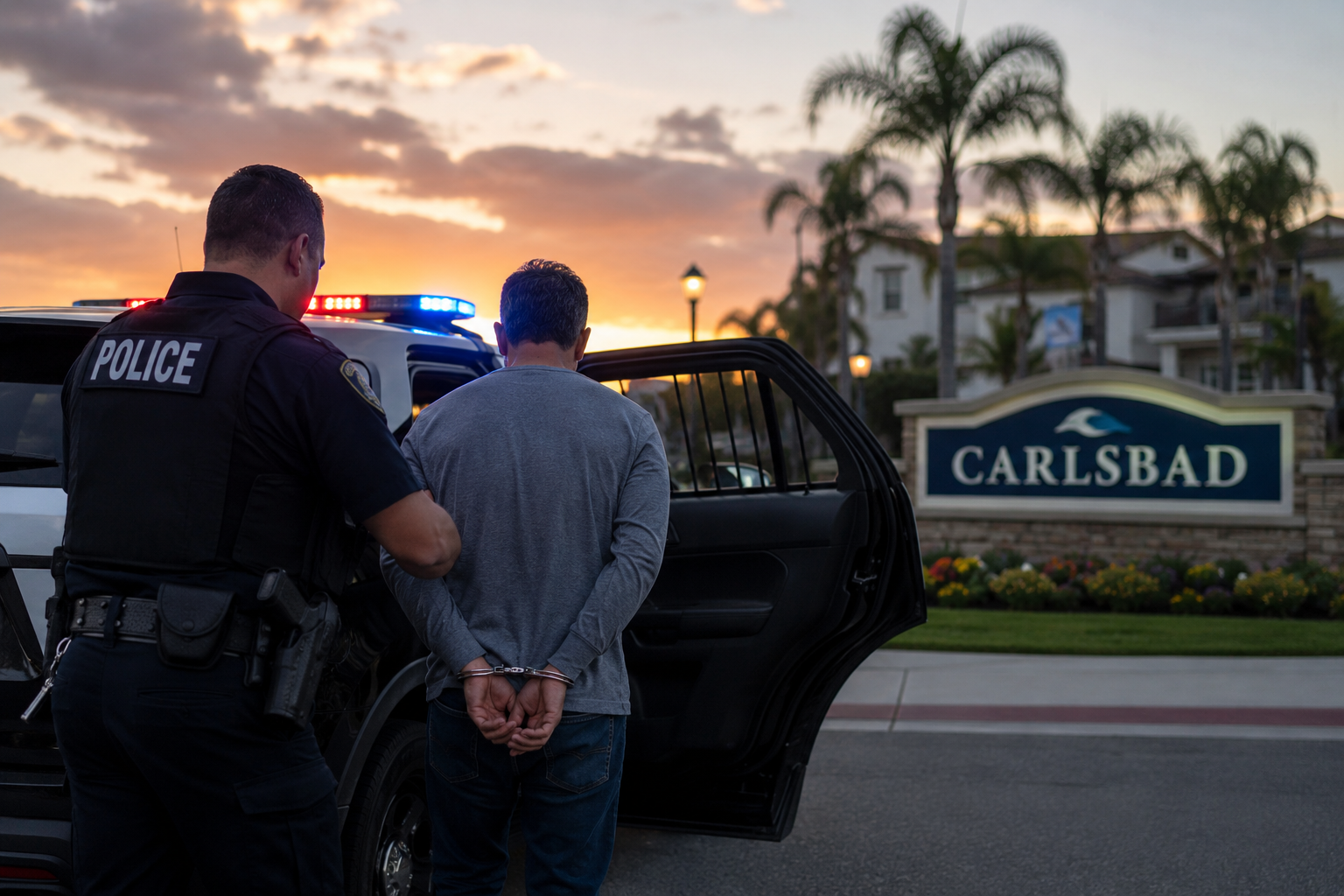
A domestic violence arrest in Carlsbad or North County San Diego triggers an immediate chain of events including booking, a temporary protective order, and criminal charges that the alleged victim cannot drop. California Penal Code 243(e)(1) makes domestic battery a misdemeanor even when no injury occurs, while Penal Code 273.5 covers cases involving visible injury and can be charged as a felony. Understanding what happens next and how to protect your rights is critical.
Being arrested for domestic violence is overwhelming and confusing. In most cases, the process moves quickly and decisions made in the first few days can shape the outcome of the entire case. This guide explains what to expect after a domestic violence arrest in Carlsbad or North County San Diego, the charges you may face, how protective orders work, and why early legal representation matters.
What Happens Immediately After a Domestic Violence Arrest?
When police respond to a domestic dispute in Carlsbad or North County, California law strongly encourages officers to make an arrest if they observe any evidence of a physical altercation. The arrested person is transported to the local jail for booking, which includes fingerprinting, photographs, and a background check.
In most cases, the responding officer will request a temporary emergency protective order at the scene. This order takes effect immediately and typically lasts 5 to 7 days. It may prohibit the arrested person from contacting the alleged victim, returning to the shared residence, or going near the alleged victim's workplace.
Bail is set based on the severity of the charges and the defendant's criminal history. In some misdemeanor cases, the defendant may be released on their own recognizance. In felony cases or situations involving serious injury, bail may be set higher or denied.
What Domestic Violence Charges Can You Face in California?
Domestic Battery Under Penal Code 243(e)(1)
Penal Code 243(e)(1) is the most commonly filed domestic violence charge in California. It makes it a misdemeanor to willfully touch an intimate partner in a harmful or offensive manner. The charge applies to current or former spouses, cohabitants, dating partners, and co-parents.
A critical point about this statute is that no visible injury is required. A push, a grab, or any unwanted physical contact can result in a domestic battery charge. Penalties include up to one year in county jail, a fine up to $2,000, and a mandatory 52-week batterer's treatment program if probation is granted.
Corporal Injury to a Spouse Under Penal Code 273.5
When the alleged victim suffers a visible injury, prosecutors may file charges under Penal Code 273.5 instead. This is a "wobbler" offense, meaning it can be charged as either a misdemeanor or a felony depending on the severity of the injury and the defendant's criminal history.
A felony conviction under PC 273.5 carries two, three, or four years in state prison and a fine up to $6,000. The distinction between 243(e)(1) and 273.5 often comes down to whether the prosecution can document a "traumatic condition," which California law defines as any wound or bodily injury caused by physical force.
What Is a Protective Order and How Does It Affect You?
Protective orders are one of the most immediate and impactful consequences of a domestic violence arrest. According to the California Courts Self Help Guide, a domestic violence restraining order can prohibit contact with the protected person, require the restrained person to move out of a shared home, and restrict access to shared children.
The emergency protective order issued at the scene is temporary, lasting only 5 to 7 days. At your arraignment, the court will typically issue a criminal protective order that can last for the duration of the case or, upon conviction, up to 10 years.
Violating a protective order is a separate criminal offense that can result in additional charges and jail time regardless of whether the protected person invited the contact. A common misunderstanding is that the alleged victim can "drop" a protective order. Only the court has the authority to modify or remove it.
Where Are North County Domestic Violence Cases Heard?
Domestic violence cases originating in Carlsbad, Oceanside, Vista, Encinitas, San Marcos, and Escondido are heard at the North County Courthouse in Vista, located at 325 South Melrose Drive, Vista, CA 92081. This full service branch of the San Diego Superior Court handles criminal cases for most of Northern San Diego County. For a complete guide on what to expect at this courthouse, see our post on preparing for a hearing at the North County Courthouse.
Can Domestic Violence Charges Be Dropped if the Victim Recants?
This is one of the most common questions people ask after a domestic violence arrest, and the answer is almost always no. The alleged victim does not decide whether charges are filed or dropped. That decision belongs to the San Diego County District Attorney's Office.
Prosecutors routinely proceed even when the alleged victim recants or says they want the charges dismissed. The DA's office treats domestic violence as a public safety matter, not a private dispute, and will rely on police reports, 911 recordings, photographs, and witness statements to build their case.
How a Carlsbad Criminal Defense Attorney Can Help
Early legal representation can make a significant difference in a domestic violence case. An experienced attorney may be able to intervene before formal charges are filed, request modification of protective orders, and begin building a defense strategy right away. Common defenses include self-defense, false accusations, and lack of willful intent.
Coastal Legal Center has offices in both Carlsbad and downtown San Diego. With over 40 years of criminal defense experience throughout San Diego County, the firm's attorneys are prepared to defend clients facing domestic violence charges at the North County Courthouse and beyond.
